


WWII and Life on the River Kwai
- leboughton
- Mar 1
- 2 min read
Updated: Mar 2
After leaving Bangkok, we headed a few hours north to Kanchanaburi.
We had the chance to learn a lot about the Second World War, but before I dive into that, let me tell you about our accommodation, which was fantastic. We stayed at the Float House River Kwai, which as the name implies, consisted of floating bungalows. Access was by speedboat, which made me very happy given my proclivity for wind and water…

Each room was a small villa, tethered to shore and resting on pontoons. The rooms were accessed by a series of boardwalks, also floating. Very cool and once I got my sea legs, very soothing!



The food and drinks were excellent, we had time to kayak, which was really fun and easy given the river currents, and I even worked in a Thai massage. There were actually 3 related resorts on this stretch of river, designed to appeal to various demographics - upscale, off the grid, and family friendly. We were able to visit and use the amenities at any of the 3. A really great stay, which was a nice balance to the history learning we also did during our time in this area.
First stop on the learning tour was the Thai-Burna Railway Interpretive Center, which provided a great education on the “death train”. This was a rail line the Japanese forced allied POWs and local people to build during WWII. This line was important strategically for the Japanese to supply their occupation of Burma and support their efforts to take India. Conditions were brutal and thousands lost their lives. This was an aspect of WWII history I knew nothing about so it was eye opening to say the least.
Right nearby was the famous bridge over the River Kwai, which the death train ran over. It was rebuilt with steel after being blown up by the Allies, but you could still see much of the original wooden structure beneath.





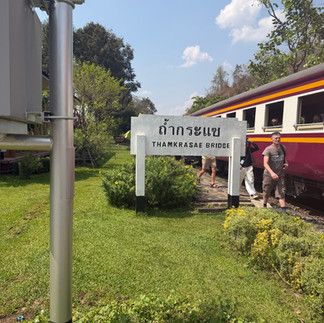
We also were able to ride for a few stops on the original tracks, including passing over a narrow railway bridge that was a particularly treacherous part of the construction. It was an old train with open windows, and I was very happy with my head out the whole way to take in the view.






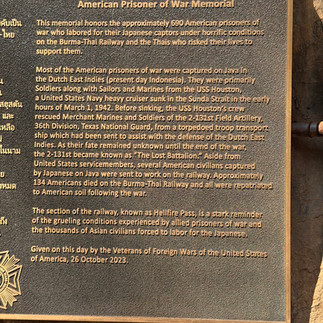
The next day, we visited Hellfire pass, an area where the POWs had been forced to use hand tools and sticks of TNT to blast through the solid granite cliffs to clear a pass for the train. This site was developed as a memorial by the Australians, whose POWs made up the majority of the workforce here. It was a nice hike to get to the pass, and the memorials and interpretive center were excellent.


I could have stayed here another few days to really enjoy the river and the resorts, but we were off to Chiang Rai bright and early on Friday morning. More on Chiang Rai soon!


Comments